

← All articles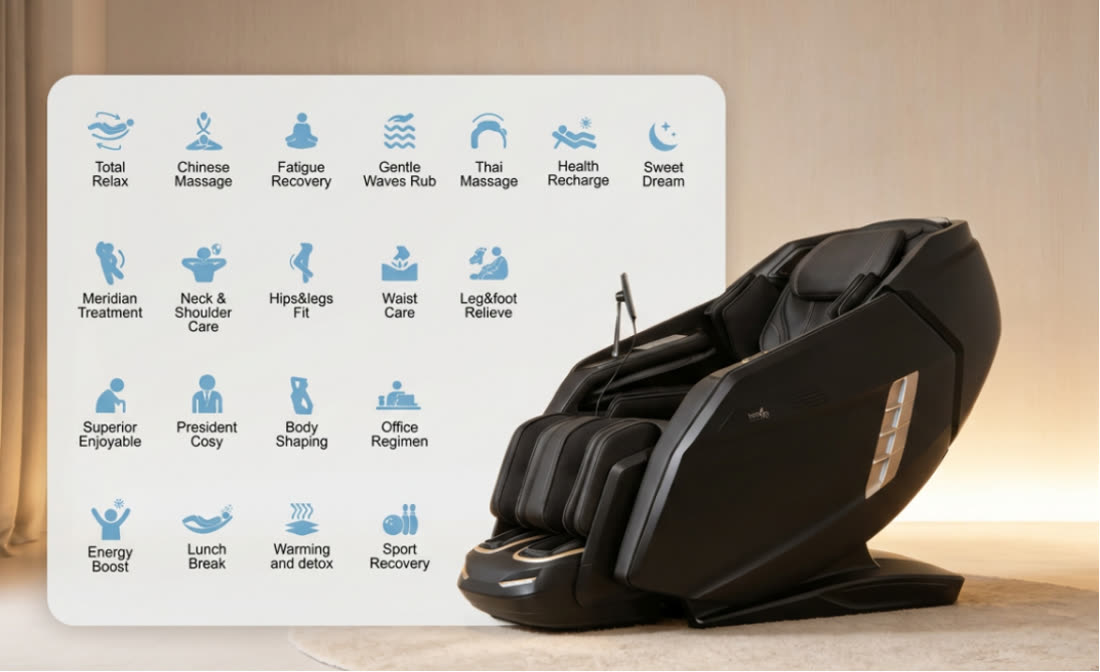
Thai massage in massage chairs: what it is and who it suits
Thai massage is one of the oldest forms of massage in the world and an integral part of traditional Thai medicine. It combines massage, stretching and acupressure. This article explains the technique and how a massage chair reproduces it.
Where it comes from
Traditional Thai massage grew out of meditative practice going back some 2,500 years. Its basis is the idea of sen — invisible energy lines running through the body. According to this theory, when energy flows freely the body is in harmony.
The therapist activates these lines with hands, elbows, knees and feet, applying deep pressure that is both stimulating and relaxing. Thai massage is often called passive yoga: the therapist guides the body through a sequence of movements, helping it stretch without effort from the person. That is what most distinguishes it from other techniques.
What it does
- eases back pain;
- increases joint mobility and muscle flexibility;
- widens the range of motion, which matters for injury prevention;
- improves circulation;
- reduces tension and anxiety.
Thai massage particularly suits people under stress, with tension in the shoulders and neck, or in need of deep whole-body relaxation.
How it works in a chair
In a massage chair Thai massage is a stretching program: airbags hold the shoulders, arms and hips while the backrest and rail change the body position. The body is stretched much as a therapist would do it, without the therapist.
Worth knowing: this is one of the most intense programs. If your chair is new to you, start with gentler programs and shorter sessions — the body needs time to adjust.
Which models include it
The Thai massage program is available in the iRest Maesthron (A801), Grandease (A550), Queentri (A357) and Brillactiq (A665).