← All articles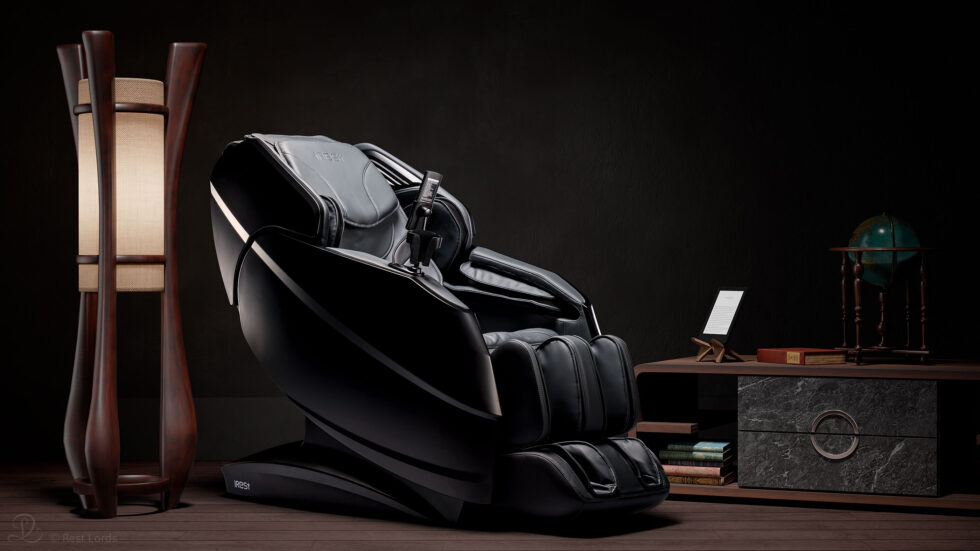
Back ache after a working day: exercise, massage or a massage chair?
Lower back aching after a day at a computer or behind the wheel? What disc pressure measurements show and what really helps – exercise, massage or a massage chair.
If your lower back “locks up” in the evening – it is hard to straighten up and when you stand you want to lean your hands on your knees – the problem is most likely not your back, but how you spent the day.
What sitting really does
For decades office ergonomics relied on the measurements of Swedish orthopaedist Alf Nachemson: intradiscal pressure in the lumbar spine is about 40% higher sitting than standing. In 1999 German biomechanist Hans-Joachim Wilke and colleagues published more precise measurements in Spine, using a sensor implanted in the L4–L5 disc of a living person – and the picture turned out differently (Wilke et al., 1999). Relaxed sitting produced roughly the same pressure as relaxed standing (~0.5 MPa). But leaning forward – as at a screen or a steering wheel – almost doubles it: up to 0.83 MPa sitting and 1.1 MPa standing. Lying down – only 0.1 MPa.
The conclusion is simple: it is not the chair itself that harms the disc, but the posture in it and the fact that it does not change for hours. Muscles add to it: the hip flexors shorten, the glutes “switch off”, and the lumbar extensors hold static tension all day. By evening they do not so much hurt as simply fail to relax.
What helps
Exercise. The only way to remove the cause. 5–10 minutes a day: hip flexor stretch, “cat–cow”, glute activation (bridge), plus standing up at least once an hour. Results come after 2–3 weeks, not immediately.
Massage by a therapist. The fastest help when a muscle is already in spasm – a therapist finds the exact spot. The downside is cost and time: most people cannot keep up a weekly visit.
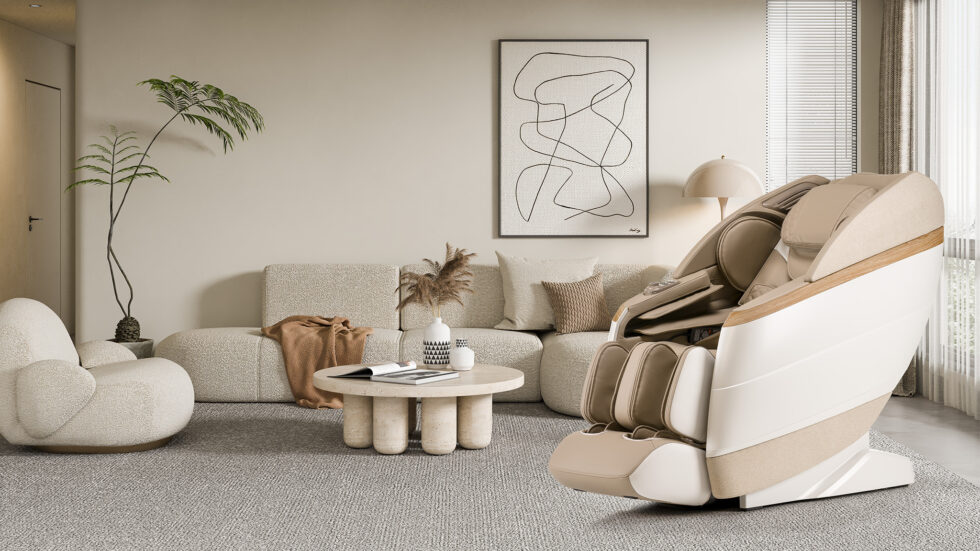
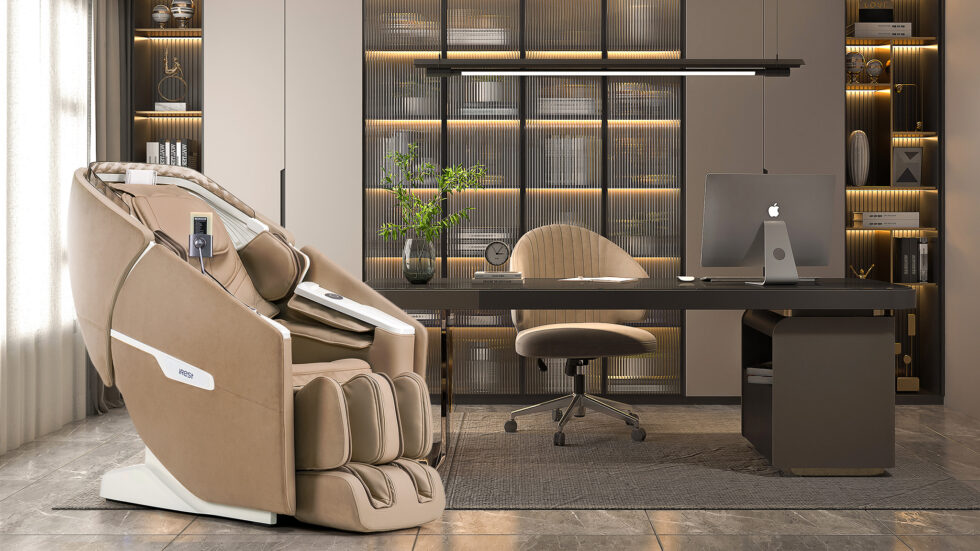
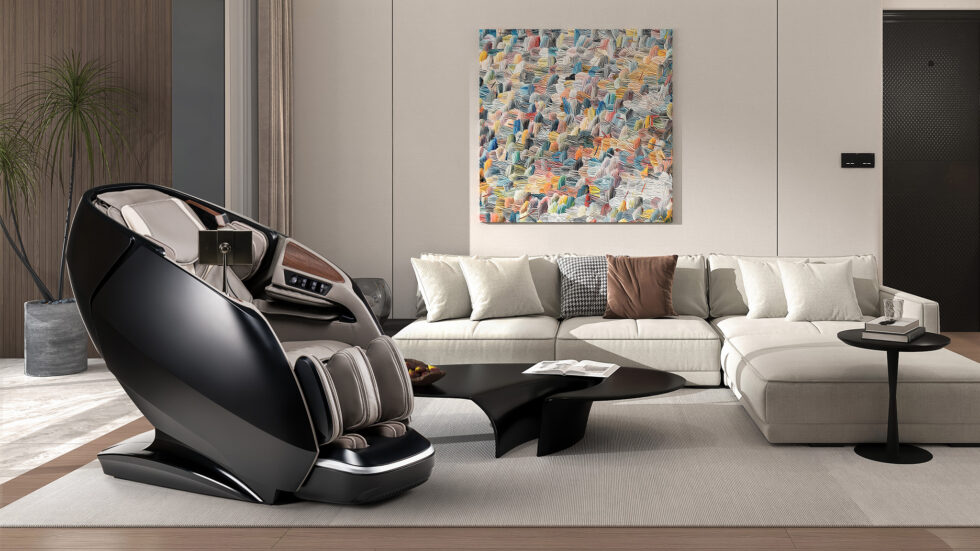
Massage chair. Not removing the cause but daily care. In a 2020 randomised trial in South Korea (Kim et al., Medicine), 56 people with low back pain were split into a physiotherapy group and a massage chair group. In the chair group pain, daily function and satisfaction improved significantly (p < 0.001); physiotherapy gave a somewhat better result, but the chair cost about 40% less over the same period (Kim et al., 2020). The chair wins not on precision but on regularity: 15 minutes of lumbar massage with heating and the Zero Gravity position, in which the body rests much like in bed, happen every evening rather than once a month.
Short answer
Exercise is essential. Massage – when it flares up. A chair – so it does not flare up. If you are choosing a chair for your lower back, look at lumbar heating and Zero Gravity – more in what a massage chair does for each part of the body, and compare models in the chair comparison table.
Sources
- Wilke H.-J. et al., Spine, 1999 – intradiscal pressure in daily activities – PubMed 10222525
- Kim S.K. et al., Medicine, 2020 – massage chair vs physiotherapy for low back pain – Medicine 2020