
← All articles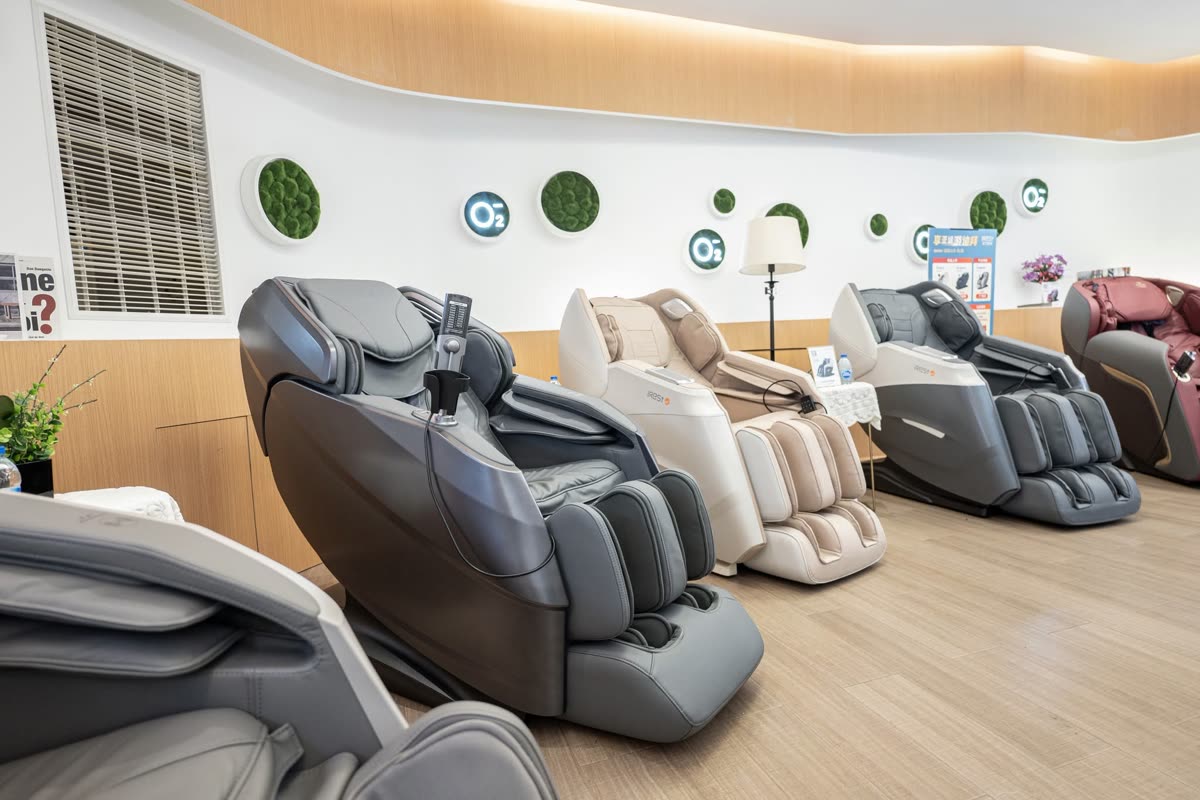
How to choose a massage chair
Buying a chair without trying it out first is difficult, and a specification table doesn't tell you much until you know which figures actually matter. Briefly — what to look at.
Start with height
This is the most important criterion, and the one most often overlooked. Every model has a recommended user height range. If you fall outside it, the massage arms won't work where they should: for a tall person, the mechanism won't reach the neck, and for a shorter one, it will press in the wrong spot.
Measure the space
You need to know two measurements: how much room the chair takes up upright and how much when reclined. Models with Zero Wall function first move forward and then recline, leaving just 10 centimetres to the wall. Without this function, you'll need to leave around half a metre.
Track shape and length
An SL-shaped track runs from the neck down the back to the thighs, so the buttocks are massaged as well. An L-shaped track ends at the lower back. Length is given in centimetres: 135 cm is a common figure for mid-range models.
Features that change everyday use
Lower back heating is one of the most frequently used features during the colder months. Foot rollers are useful for those who spend a lot of time standing. The Zero Gravity position, where the legs are raised above heart level, reduces the load on the spine. A long list of programmes sounds appealing, but in practice, people tend to stick to two or three favourites.
Upholstery
Faux leather is easier to clean and cheaper; genuine leather feels nicer to the touch and lasts longer, but requires more care. Lighter shades look visually lighter, while darker ones are more practical.
Noise
The chair isn't silent. If you plan to use it in the evening while others in the household are sleeping, it's worth checking the noise level in person.
Servicing
Find out who will come out if the mechanism breaks down, and whether spare parts are available. This matters far more than an extra programme you'll never actually use.